



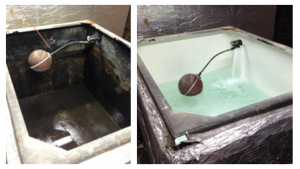
If a cold water storage tank has failed an inspection, produced a poor sample result or shows dirt or debris, a professional clean and disinfection is the right next step.
We clean and disinfect cold water storage tanks and related plant, then give you a job sheet and certificate for your records. Our work follows HSG274, supporting ACoP L8.
What is a cold water tank clean and disinfection?
A tank clean removes sediment, scale, rust, sludge and biofilm from the inside of the tank. The tank is then disinfected using an approved method and contact time, so bacteria levels fall and the stored water is safe to use.
This matters because stored water deteriorates. Dirt, scale and stagnant water create the conditions bacteria need. A professional clean and disinfection helps to:
- Remove sediment, biofilm and debris
- Improve the condition of stored water
- Reduce risks linked to Legionella
- Support compliance with HSG274
Tank cleaning versus tank disinfection
Cleaning and disinfection are closely linked, but they are not the same. Cleaning removes physical contamination. Disinfection treats the tank and the water system afterwards. In most cases both are needed. Disinfecting a dirty tank on its own is not enough, because bacteria return quickly if sediment and biofilm remain. A proper service cleans first, then disinfects.
Signs your tank may need cleaning
- Visible dirt, sediment or sludge
- Rust staining inside the tank
- Damaged lids or vents
- Missing or poorly fitting insect screens
- Stale or discoloured water
- Poor microbiological results
- Low water turnover
- Evidence of biofilm on internal surfaces
Often the need is found during an inspection, a sample review or a Legionella risk assessment.
How often should a cold water tank be cleaned?
There is no single fixed frequency for every tank. HSG274 expects tanks to be inspected regularly, and cleaned and disinfected where inspection shows it is needed. Cleaning is likely to be needed more often in healthcare, schools and care settings. You should arrange a clean if:
- The tank contains sediment, rust, scale or sludge
- Sample results show raised bacteria levels
- The tank has been unused for a long time
- The tank has been repaired, relined or altered
- Your risk assessment recommends cleaning
- The stored water looks dirty or stale
Why do cold water tanks become dirty?
Sediment can enter through the mains supply and settle in the tank. Biofilm can grow on internal surfaces, especially when water moves slowly or the tank is too big for the building. Common causes:
- Stagnant or slow-moving water
- Damaged or missing lids
- Poorly fitting insect screens
- Sediment from the incoming supply
- Corrosion or ageing tank materials
- Dead legs or little-used outlets connected to the tank
What is involved in cleaning and disinfecting a tank?
The exact method depends on the tank, access and site conditions, but most cleans follow these steps:
- Planning and isolation: the work is planned so the tank can be isolated and drained safely.
- Drain down.
- Internal cleaning: sediment, scale, rust, sludge and biofilm are removed.
- Condition check: lids, screens, corrosion and defects are inspected and noted.
- Disinfection: the tank and system are disinfected with an approved agent and contact time.
- Flushing and return to service.
- Records: a job sheet and certificate are sent to you
Safety and access
Tank work can involve confined spaces, so safety is planned before work starts. We assess access, isolation and ventilation before anyone enters a tank.
What happens after the tank has been cleaned?
You should receive records showing what was done, with disinfection details and contact times, and recommendations. Further action may be needed:
- Replacing damaged lids
- Repairing insect screens
- Removing redundant pipework
- Improving access
- Reviewing tank turnover
- Follow-up water sampling
See our remedial works and UKAS water sampling pages for those steps.
Why Water Hygiene Services?
- Independent, Leeds-based, with more than 23 years' experience in Legionella control
- Members of the Legionella Control Association
- Planned, safe working method for every tank
- A job sheet for every project listing each tank or system cleaned
- Clear records and practical advice if we find defects
Frequently asked questions
Will we lose our water supply?
The tank is isolated and drained, so we plan with you to keep disruption low, for example by out-of-hours working or temporary supplies.
Do you need to sample afterwards?
Not always. If your risk assessment calls for it, we arrange sampling after the clean.
What do we receive afterwards?
A job sheet and certificate, and notes on any defects found.
Use the quote form.
Contact us for a Free Quote
Very happy with their very high standard of work Water Hygiene Services have been carrying out legionella risk assessments for us for a couple of years now. We have been very happy with their very high standard of work, their ability to work to tight deadlines and the general professional service they provide
